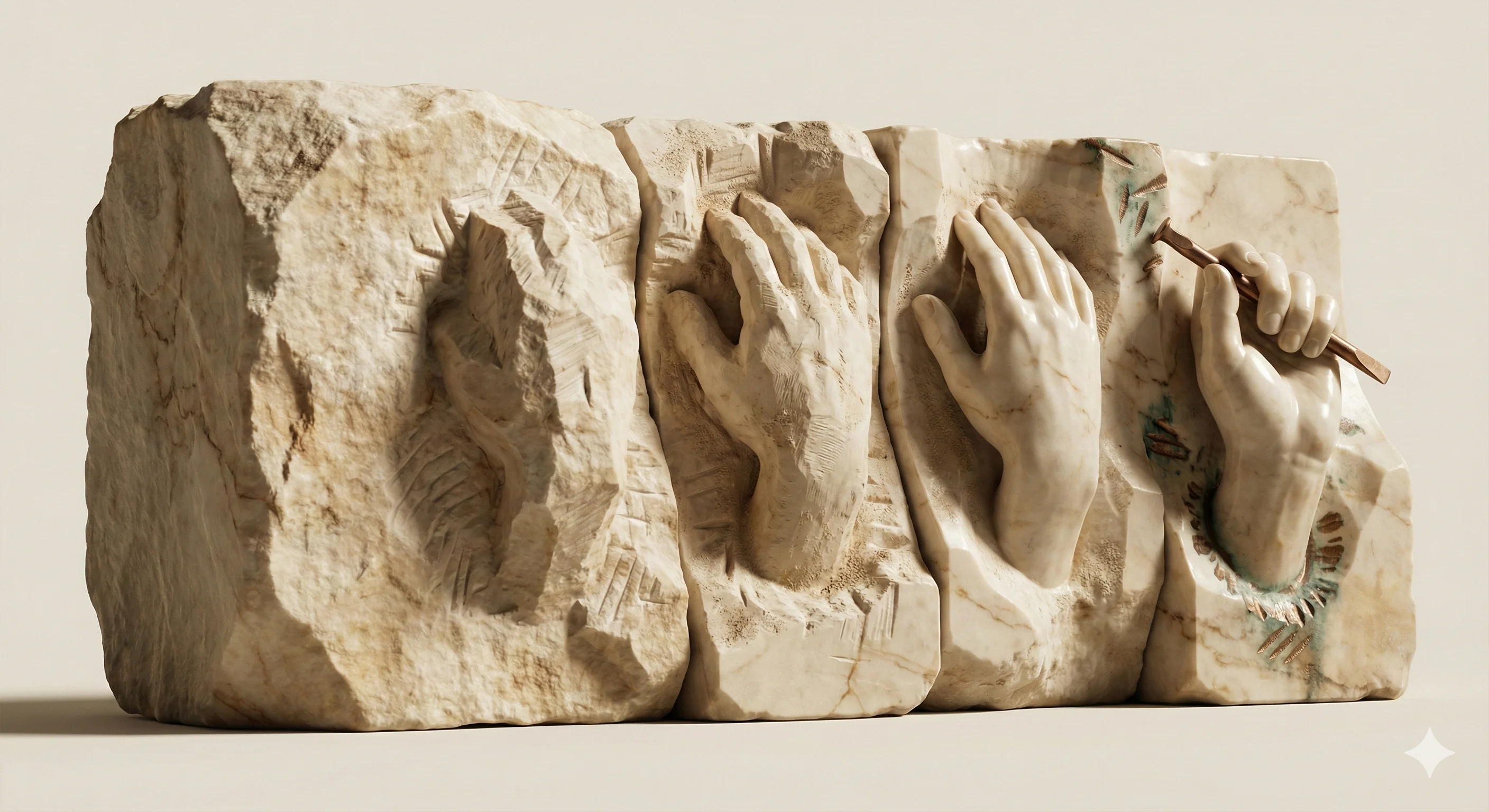
The End of the Brain in a Jar
For decades, artificial intelligence systems were like brilliant experts locked in a dark, silent room. They could read millions of books, but they had never seen a sunset or heard a human voice. A text model could write eloquently about the Mona Lisa, but if you showed it a picture of the painting, it saw nothing but digital noise.
Here is the key insight: That era of sensory deprivation is over. Multimodal AI systems have gained the ability to see, hear, and speak. Unlike the text-only chatbots of the recent past, models like GPT-4V and Gemini can process text, images, audio, and video simultaneously. They do not just analyze these inputs separately; they understand the relationships between them. This shift transforms AI from a document processor into a system that can perceive and interact with the physical world.
A Common Language of Numbers
You might wonder how a computer compares a photograph of a cat to the word "cat." To a traditional computer, an image is a grid of pixels (colors), while a word is a string of characters. They look nothing alike.
Multimodal models solve this through a concept called embeddings. Think of embeddings as a universal translator. The AI converts the image of the cat into a long list of numbers (a vector). It also converts the word "cat" into a list of numbers. Through massive training on image-text pairs, the model learns to place the image-numbers and the word-numbers very close to each other in a mathematical space. This allows the system to "know" that the image and the word represent the same concept.
New Senses, New Risks
When we give AI senses, we also give it new ways to be deceived. In text-only models, we worry about users typing malicious instructions. In multimodal models, we face visual prompt injection. Bad actors can hide text commands inside an image—invisible to the human eye but readable by the AI. An image of a legitimate invoice could contain hidden instructions telling the AI to "transfer funds to this new account."
Furthermore, the ability to generate realistic audio and video creates profound trust issues. We have moved from a world where "seeing is believing" to one where we must verify everything. The Pope Francis puffer jacket image was a harmless example, but the Biden robocall deepfake demonstrated how these tools can threaten democratic processes.
Governing the Senses
For governance professionals, multimodality requires a unified approach to policy. You cannot simply have a "text policy" and an "image policy" when the system processes both at once. We recommend implementing a Multimodal AI Governance Framework that specifically addresses cross-modal risks.
Here is what matters: You must establish provenance. Because synthetic media is becoming indistinguishable from reality, organizations should adopt standards like C2PA, which acts like a digital nutrition label, proving where a piece of content came from. Additionally, you need robust verification protocols to ensure that when your CFO calls you on the phone, it is actually them, and not a voice clone.
By understanding these capabilities now, you can prepare your organization for a future where AI doesn't just read your files—it watches your video feeds and listens to your calls. Next, we will look at the massive physical resources required to power these sensory capabilities in AI Compute Requirements.
KEY LEARNINGS
- Multimodal AI systems can process and generate multiple types of data—text, images, audio, and video—simultaneously.
- These models work by converting different sensory inputs into 'embeddings,' a shared mathematical language that allows the AI to relate words to images.
- The capability to 'see' introduces novel security risks, such as visual prompt injection, where malicious commands are hidden inside images.
- Generative multimodal systems exacerbate trust issues, necessitating provenance standards like C2PA to verify content authenticity.
- Governance must evolve to address biometric privacy risks, as systems that analyze images can inadvertently identify individuals.
- 📄OpenAI: GPT-4V System CardTechnical safety documentation for GPT-4 with vision.
- 🌐C2PA Technical SpecificationOfficial content provenance standard documentation.
- 📄Anthropic: Claude 3 System CardSafety documentation for multimodal AI system.
- OpenAI. (2023). GPT-4V(ision) System Card.
- Coalition for Content Provenance and Authenticity (C2PA). (2023). Technical Specification.
- NIST. (2024). Synthetic Media Detection: Technical Approaches.